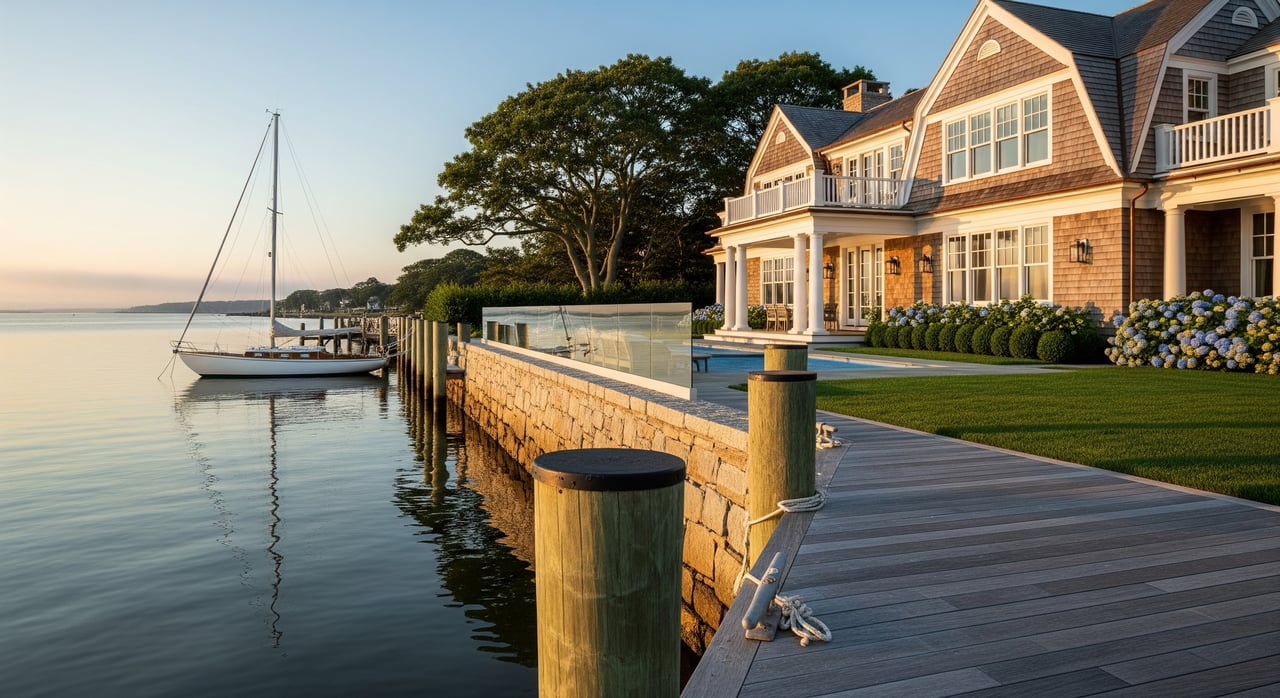
Why do two Southport waterfront homes on the same road sell for very different prices? If you are buying or selling on the water in 06890, details like view quality, frontage, dock rights, and flood exposure can swing value more than interior square footage. You want clear guidance grounded in local realities, not general rules that do not fit our shoreline. In this guide, you will learn what drives price on Southport’s coast, how to think about comparables, and the due diligence that protects your investment. Let’s dive in.
What buyers pay for on the water
View quality and orientation
Water views are not all equal. Panoramic Long Island Sound or harbor vistas with long sight lines tend to command the highest premiums because they deliver stronger aesthetic impact, better sunrise or sunset exposure, and a greater sense of privacy. Partial or obstructed views usually trade at a discount. Orientation matters too, since south or southwest exposures often provide more sunlight and desirable water outlooks.
Shoreline frontage and access type
Direct littoral frontage, where your property meets the water, sits at the top of the value spectrum. Upland homes with a private walkway, or deeded beach rights, are strong but typically below true direct frontage. Shared or communal access is another step down. Some markets use dollars per linear foot of frontage as a quick check, then layer qualitative adjustments for view quality, access, and privacy.
Dock rights, moorings, and permits
Permitted docks, fixed piers, floating docks, and boatlifts can significantly increase value for boating-focused buyers. Transferable permits and clear documentation are essential. Channel depth, harbor rules, shellfish areas, and neighboring bulkheads can limit utility, so buyers should verify feasibility early. Unpermitted structures reduce value and can lead to costly remediation.
Shoreline improvements and condition
Bulkheads, riprap, seawalls, and revetments protect the property and affect long-term costs. Recent, well-documented shoreline work is a positive signal. Failing or poorly maintained protection can trigger price reductions because replacement often requires specialized contractors and permits. Condition, age, and engineering reports help quantify risk and future expense.
Elevation, topography, and flood exposure
Elevation relative to sea level and whether a property lies in FEMA AE or VE zones are critical to mortgageability, insurability, and perceived risk. Finished floor elevation compared to Base Flood Elevation influences building requirements and flood premiums. Higher sites with uninterrupted views tend to earn premiums. VE zones, which reflect coastal high-velocity conditions, usually carry higher costs and stricter standards.
Lot size, landscaping, and privacy
Larger waterfront lots with mature plantings and thoughtful outdoor living spaces often trade at higher prices. Terraces, stairs, and seaworthy features can matter more than raw acreage. Privacy buffers also influence demand, especially for high-value estates. The way a site lives outdoors can be as meaningful as the way the house lives inside.
Architectural pedigree and finish quality
Homes with notable architects, significant history, or high-end custom construction attract a specific buyer pool willing to pay for craftsmanship and authenticity. In Southport, historic character and appropriate restoration are part of the appeal. Well-executed renovations and premium finishes stand out in competitive sets. Provenance can be a deciding factor when buyers compare otherwise similar properties.
Southport specifics that influence value
Village character and history
Southport’s historic village and preserved streetscapes create a distinct lifestyle draw. Walkable proximity to the village center and shoreline amenities often expands the buyer pool. Local historic districts or guidelines can shape renovation plans and buyer expectations. These factors add context when you evaluate comparables.
Commuter access and regional demand
Access to the Metro-North New Haven Line, including the Southport stop, is a key driver for New York City commuters. Commute time and distance to the station influence price elasticity for certain buyers. Proximity to Bridgeport and other regional employment centers broadens demand, from full-time residents to second-home buyers. This mix supports absorption in well-located waterfront segments.
Proximity to harbor, marinas, and clubs
For active boaters, being near the harbor, marinas, or yacht clubs increases day-to-day convenience. Ease of securing moorings or membership affects utility. Buyers weigh launch access and onshore amenities alongside view and frontage. The closer the boating lifestyle, the stronger the appeal for this segment.
Schools and municipal services
Public schools and town services influence how some buyers compare Southport with nearby markets. Snow removal, beach maintenance, and shoreline management can be selling points when well executed. Keep school references neutral and focus on how municipal performance and taxes affect ownership experience and operating costs.
Flood and coastal regulations
Coastal construction in Fairfield involves local building and zoning requirements, plus state coastal resource oversight. Shoreline work, such as bulkheads and docks, often requires permits. Buyers and sellers should review FEMA maps, local floodplain ordinances, and any required freeboard or elevation standards before planning new construction or major renovations. Early clarity reduces surprise costs.
Insurance and predictable operating costs
Coastal homes typically face higher homeowner and flood insurance premiums. Availability of private flood policies versus NFIP options varies by risk profile. Elevation certificates, mitigation work, and reinspections can affect quotes. Understanding these inputs helps you compare properties with different flood exposures.
Environmental and public trust limits
Ownership may not extend seaward of the mean high-water line, and public trust principles can shape littoral rights. Shellfish leases, wetlands, and dredging restrictions can also influence use and value. Title and survey work should confirm rights, easements, and boundaries. These items matter to resale and lending.
How to choose Southport waterfront comps
Start with strict filters
Begin with closed sales in 06890 from the last 12 to 24 months. If inventory is thin, consider up to 36 months, then adjust for timing. Match properties by water type first, for example open Sound versus harbor or marsh, and by access category, for example direct littoral frontage versus deeded access or view-only. Keep your initial set tight before expanding outward.
Match the variables that count
Prioritize these variables when building or adjusting your comp set:
- Water exposure category, open Sound, harbor, cove, or marsh
- Shoreline frontage length and access type, including docks and moorings
- View quality and orientation, panoramic, partial, or obstructed
- Elevation, FEMA flood zone, and finished floor elevation
- Shoreline protection type and condition, bulkhead age and integrity
- Lot size, topography, privacy, and outdoor living utility
- House size, bedroom and bath count, effective age, and finish level
- Architectural pedigree or historic status
- Proximity to the village core, harbor, beaches, and the train
- Sale timing and market momentum, including seasonality
Apply the right adjustments
Use dollars per linear foot of frontage only as a starting point. Then layer narrative adjustments for view, dock rights, elevation, permits, and architectural prestige. For risk factors like VE flood zones or unpermitted shoreline structures, adjust downward to reflect anticipated insurance, permitting, or remediation costs. When possible, anchor those adjustments with quotes from local professionals.
When supply is limited
If very few true comparables exist, expand to nearby parts of Fairfield with similar shoreline contexts, then increase your adjustment rigor. Paired sales, for example before and after a dock installation, can help infer the value of specific improvements. Document your reasoning so buyers and appraisers understand the logic. Clear narratives often support stronger outcomes.
Buyer and seller due diligence checklist
Title and littoral rights
- Confirm deed language for littoral rights, easements, and any public access areas.
- Check for recorded tidal encroachments and historical tidal surveys.
Surveys and boundaries
- Order a current boundary survey showing the mean high-water line, bulkhead location, and encroachments.
- Obtain a flood elevation certificate if the property is in a mapped flood zone.
Permits and as-built documentation
- Gather permits for docks, bulkheads, additions, and major renovations.
- Disclose any unpermitted work, since it may reduce value or slow closing.
Flood zone and elevation evidence
- Confirm FEMA map determinations and Base Flood Elevation.
- Request records of prior flood insurance claims when available.
Insurance and operating costs
- Secure sample quotes for homeowner and flood insurance, including any coastal surcharges.
- Estimate shoreline maintenance costs based on current conditions.
Environmental and regulatory constraints
- Ask about wetlands, shellfish leases, and dredging limits that may affect use.
- Check local and state coastal agencies for requirements tied to future work.
Structural and marine condition
- Hire home inspectors and a marine or structural engineer for bulkhead and dock assessments.
- Use current cost estimates to inform pricing and negotiation.
Neighborhood and community factors
- Review planned public works, harbor projects, or zoning updates that could affect privacy or access.
- Note proximity to village amenities and the station, since these influence demand.
Sale strategy for sellers
- Document the unique value drivers, for example view, frontage length, dock permits, elevation certificate, and architecture.
- Provide site plans, drone photos, and flood information to address buyer questions early.
Timing, scarcity, and seasonality
Waterfront inventory in Southport is limited, and it often moves differently than inland homes. When demand is positive, scarcity can lead to stronger list-to-sale ratios and faster absorption. Spring and summer typically bring more interest to the shoreline, which can accelerate bidding timelines. Smart timing, paired with complete documentation, helps you capture the market’s full attention.
Protecting value with presentation
A polished presentation can elevate outcomes on the waterfront, where buyers focus on both lifestyle and risk. Highlight the water narrative with professional visuals, clear site plans, and verified permits and elevation data. For significant homes, architectural storytelling and historic context attract the right buyer pool. If you want concierge-level execution, a team-backed approach that includes staging, coordinated inspections, and broad distribution can help your property reach its full potential.
Ready to talk about your specific property or a purchase you are considering? For confidential guidance tailored to Southport’s shoreline, connect with Libby McKinney Tritschler to request a private home valuation.
FAQs
What adds the most value to a Southport waterfront home?
- Panoramic open-water views, direct littoral frontage, transferable dock rights, favorable elevation outside higher-risk flood zones, and high-quality architecture are leading drivers.
How do FEMA flood zones affect a Southport purchase?
- Flood zones like AE or VE influence building requirements, insurance premiums, and buyer perception, so elevation certificates and mitigation details are central to underwriting and pricing.
Do I need permits for a dock or seawall in Fairfield?
- Yes, shoreline structures typically require permits and approvals, and buyers should confirm transferability and compliance because unpermitted work can lower value and delay closing.
How are waterfront comps different from inland comps in 06890?
- Waterfront comps prioritize view, frontage, dock rights, elevation, and shoreline condition, which often carry more weight than interior square footage alone.
What documents should a Southport seller gather before listing?
- Permits and as-builts, a recent survey with mean high-water line, an elevation certificate, shoreline condition reports, insurance history, and any mooring or dock documentation.
When is the best time to list a Southport waterfront property?
- Spring and summer generally bring more shoreline activity, but the right timing depends on inventory, recent comparable sales, and your documentation readiness.
How does proximity to Southport village and the train impact value?
- Walkable access to the village, beaches, harbor, and the commuter rail tends to expand the buyer pool and increase demand for lifestyle-driven purchasers.
