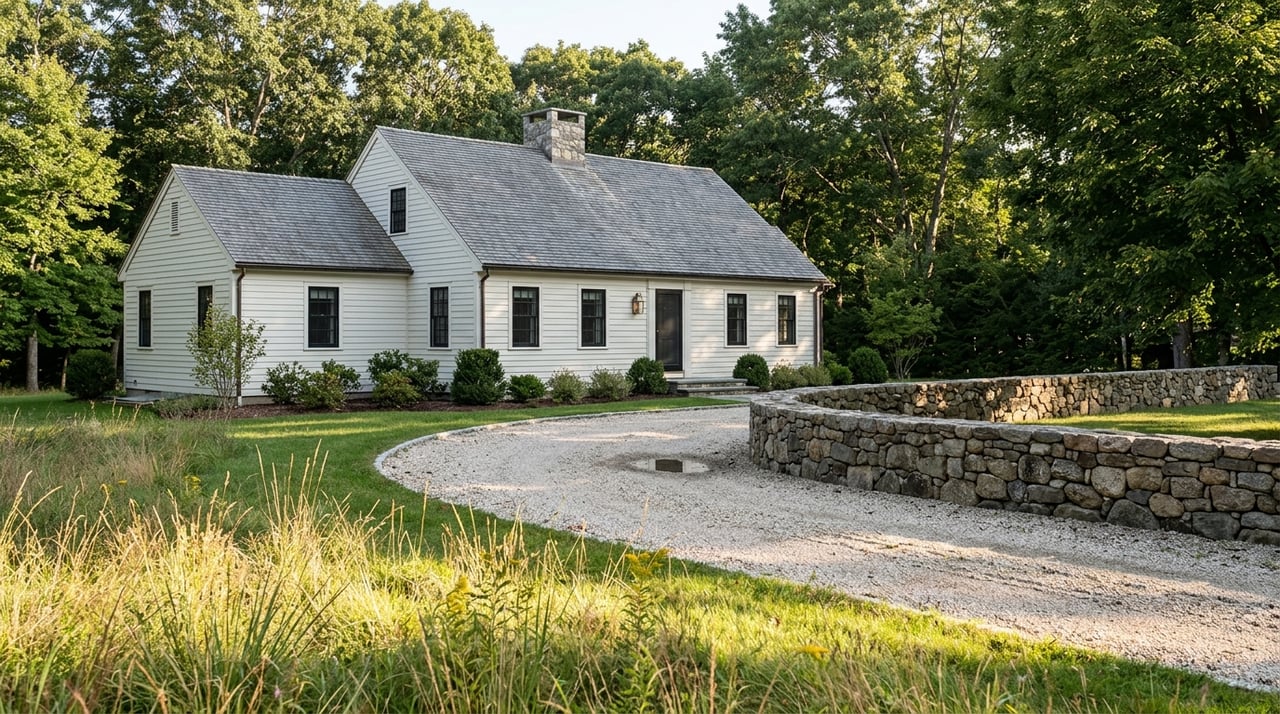
If you are drawn to space, quiet roads, and a landscape that still feels tied to the land, Easton offers something increasingly rare in Fairfield County. You may be looking for a home with more acreage, a slower daily rhythm, or simply a town where open space is part of everyday life rather than a marketing phrase. In Easton, the country setting is real, and it is protected by long-term land use choices, working farms, and watershed preservation. Let’s take a closer look.
Easton’s country feel is intentional
Easton is often described by the town as an oasis of rural charm in Fairfield County, and that description reflects more than scenery alone. According to the Town of Easton, more than one third of the town’s land is forever preserved.
That preservation shows up in the way the town feels when you drive through it. A 2025 town profile reports 7,612 residents across 27 square miles, or about 278 people per square mile, which gives Easton a notably low-density pattern compared with more built-up suburban communities in the region.
Easton’s rural character also comes from policy, not chance. The town’s open space plan describes Easton as the last vestige of a rural landscape in Fairfield County, shaped over time by preservation efforts, watershed protection, and zoning decisions.
Larger lots shape daily life
One reason Easton feels different from nearby towns is its housing pattern. The town’s zoning regulations include a 40,000-square-foot minimum lot area in Residence A and a 3-acre minimum lot area in Residence B.
In practical terms, that often means more separation between homes, more visible tree cover, and a streetscape that feels less compact. The stated goals of the zoning code also include protecting tranquility, natural resources, and the regional water supply, which helps explain why Easton retains a more open, country-like setting.
If you are coming from a denser shoreline or commuter suburb, this can be one of the biggest lifestyle shifts. You may find that privacy, land, and a quieter visual environment are part of the appeal.
Farms are part of everyday Easton
In some towns, rural identity is mostly historical. In Easton, it is active and visible.
The town’s Agricultural Commission farm map highlights more than 20 working farms and farm stands. These include Christmas tree farms, orchards, produce stands, flower growers, honey producers, vegetable farms, and equine services.
That matters because it shapes your routine in small but meaningful ways. Depending on the season, you may stop for produce, visit a tree farm, or pass horse properties and cultivated fields on a normal drive through town.
Easton also reinforces this identity through its Right to Farm ordinance, which recognizes farming as central to the town’s heritage, scenic vistas, open space, watershed, and local economy. For residents, that means agriculture is not treated like an afterthought. It is considered part of what makes Easton, Easton.
Seasonal traditions feel especially local
One of the clearest examples is Easton’s tree farm culture. The town officially recognized Easton as the Christmas Tree Capital of Connecticut, and town officials note that visitors come from Connecticut, New York, and New Jersey during the holiday season.
This gives Easton a seasonal rhythm that feels distinct. The country setting is not static or staged. It becomes part of annual traditions that bring both residents and visitors into the town’s farm landscape.
Open space defines the scenery
Easton’s landscape is shaped not only by farms but also by reservoirs, woodlands, and protected land. The town notes that four reservoirs lie all or partially within its boundaries, making Easton an important guardian of the region’s drinking-water supply.
That is an important distinction if you are trying to picture daily life here. The reservoir landscape contributes strongly to the town’s scenic character, but Easton is not a casual lake-life community centered on swimming docks and open waterfront recreation.
Instead, the experience is more about protected views, wooded corridors, and access to designated open-space areas. The result is a town that feels green, quiet, and preserved.
Outdoor life is practical and low-key
If you enjoy being outside, Easton offers a grounded, everyday kind of outdoor lifestyle. The town’s trails and open-space resources list activities such as hiking, dog walking, fishing, riding, cross-country skiing, and snowshoeing in designated areas.
Places named by the town include Centennial Watershed State Forest, Mill River Open Space, Paine Open Space, and Aspetuck Park. The town’s open space plan also points to larger corridors such as Trout Brook Valley and the broader footprint of Centennial Watershed State Forest across multiple towns.
This is part of what makes Easton appealing to buyers who want outdoor access without giving up Fairfield County convenience. You are not moving to a resort town. You are living in a place where woods, trails, and open land are woven into the local pattern.
Reservoir recreation has limits
Because much of Easton’s water landscape is protected watershed land, recreation comes with rules. Aquarion’s recreation guidelines state that fishing requires both a Connecticut fishing license and an Aquarion permit, while activities such as swimming, wading, camping, picnicking, vehicles, and pets or horses are restricted on Centennial Watershed State Forest land.
For you as a buyer, that means the benefit is primarily scenic preservation and carefully managed access. If you are imagining unstructured waterfront use, Easton may feel different from what the reservoir views first suggest.
Easton feels rural, not remote
One of Easton’s strongest lifestyle advantages is that it balances country character with regional access. A town appraisal report places Easton on the edge of Fairfield County’s urban-suburban belt, bordered by Redding, Newtown, Monroe, Trumbull, Fairfield, and Weston, with Route 15 running through the southern part of town.
That geography helps explain why Easton often appeals to buyers who want more land and a quieter pace without feeling cut off. A 2025 town profile reports a mean commute time of 29 minutes, which suggests a workable balance between seclusion and access for many households.
In day-to-day terms, Easton can feel tucked away while still sitting within the broader Fairfield County orbit. That is very different from being truly remote.
Housing reflects the setting
Easton’s housing costs also reflect its low-density, larger-parcel character. The same 2025 town profile reports a median home value of $727,200, a median household income of $189,505, and a median rent of $2,719.
Those numbers point to a relatively high-cost market compared with statewide figures. For many buyers, that cost is tied directly to what Easton offers: more land, preserved surroundings, a working farm culture, and a setting shaped by long-term protection rather than ongoing intensification.
If you are comparing Easton with nearby towns, it helps to think beyond square footage alone. Here, the setting itself is a major part of the value.
What daily living in Easton often feels like
For many residents, Easton offers a version of Fairfield County living that feels quieter, greener, and more spread out. Your daily backdrop may include stone walls, wooded roads, farm stands, reservoir edges, and larger residential parcels.
That atmosphere can be especially appealing if you value privacy, outdoor access, and a more measured pace. At the same time, Easton is best understood as a protected rural town within a highly connected county, not a remote countryside destination.
In other words, Easton’s country setting is real because it is preserved, regulated, and still actively lived. If that balance of space, stewardship, and convenience fits what you are looking for, Easton is well worth a closer look.
If you are considering a move to Easton or comparing it with other Fairfield County communities, Libby McKinney Tritschler can help you evaluate how the town’s setting, housing pattern, and lifestyle align with your goals.
FAQs
What does Easton CT mean by a country setting?
- Easton’s country setting refers to its low-density development pattern, preserved open space, working farms, watershed land, and zoning that supports larger residential lots.
Are there working farms in Easton CT?
- Yes. Easton’s Agricultural Commission highlights more than 20 working farms and farm stands, including orchards, produce, flowers, honey, Christmas trees, and equine services.
Can you use the reservoirs in Easton CT for recreation?
- Reservoir areas in Easton are scenic and important to the town’s identity, but recreation is regulated. Some activities are permitted in designated areas, while uses such as swimming and casual waterfront recreation are restricted.
Is Easton CT rural or suburban?
- Easton is best described as rural and protected within Fairfield County. It is quieter and less dense than many nearby suburban towns, but it still has practical regional access.
Is Easton CT convenient for commuting?
- Easton remains connected to surrounding Fairfield County towns, and a 2025 town profile reports a mean commute time of 29 minutes.
Why do homes in Easton CT often come with more land?
- Easton’s zoning regulations require relatively large minimum lot sizes in key residential districts, which supports a more open, spread-out housing pattern.
